
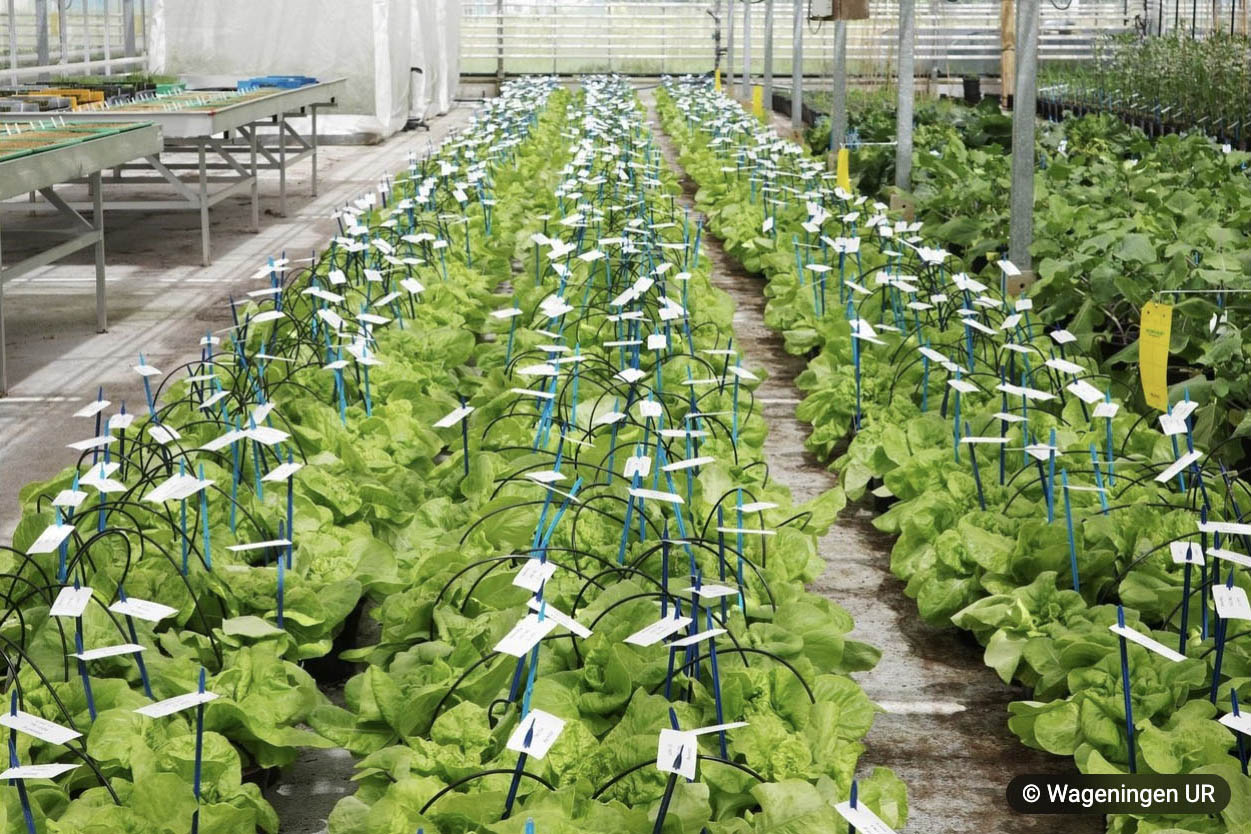
Plant breeding has slowed the internal clock of several lettuce varieties, delaying bolting and keeping the heads compact and tasty for longer. Researchers from Wageningen University & Research (WUR), Utrecht University, and Dartmouth College have now identified the gene that controls this process. Their findings, published in New Phytologist, could lead to stronger, more resilient lettuce varieties.
The biological clock, or circadian rhythm, regulates many processes in both humans and plants. In people, it controls sleep and metabolism, with jet lag being the most familiar example of what happens when the clock is disrupted. Plants also follow a daily rhythm of about 24 hours, says Cèlia Anton-Sales, plant scientist at WUR. “This rhythm ensures that processes like germination, flowering, and seed production occur at the right time of day and season. If disrupted by changes in light or temperature, seed production can fail, and in extreme cases the plant may die. For humans, disruption usually just means feeling tired, but for plants the impact is much more serious.”
Slower clock means later ‘bolting’
Sometimes, though, tinkering with the biological clock can have surprising benefits. In cultivated lettuce, a slower rhythm allows the plants to keep growing without bolting too quickly. Anton-Sales explains: “In warm summer conditions, lettuce tends to bolt—sending up a tall flowering stalk. That’s a problem for growers, because the leaves turn bitter and the stems become tough. Breeders never intentionally set out to slow down lettuce’s biological clock, but our study shows it happened as a side effect. We also discovered which gene plays a role in this slower circadian rhythm and the delayed bolting.”
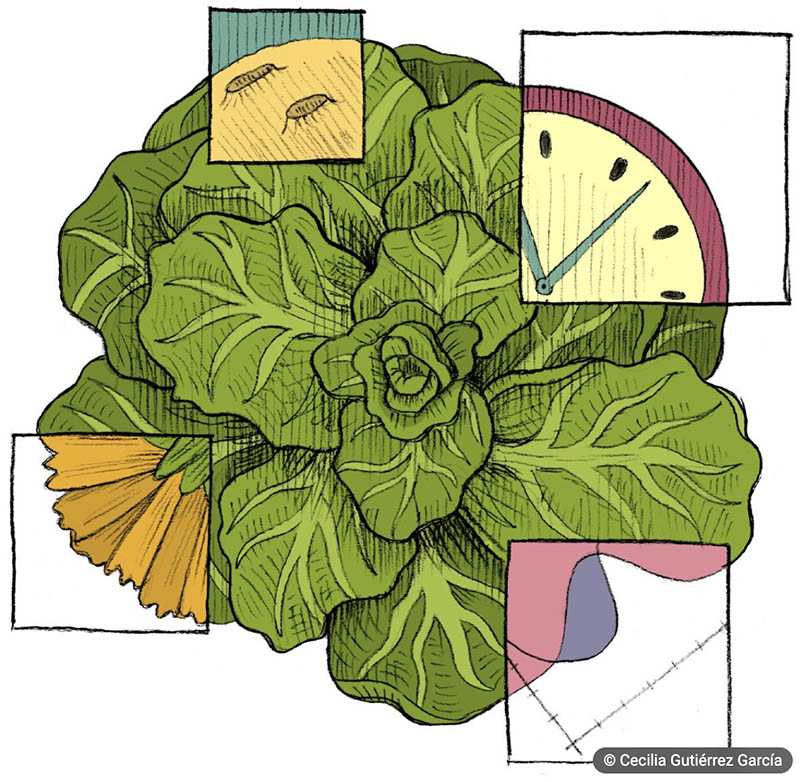
The mystery of a faulty light receptor
To dig deeper, the team studied 234 cultivated and wild lettuce varieties from WUR’s seed bank under controlled conditions. They used cameras to record the movement of leaves, which is closely tied to the internal clock. The results showed that different varieties had different rhythms, and different bolting times.
“Leaf movement is a good indicator of the biological clock,” says Anton-Sales. “That clock then drives plant growth and development. Plants use light to tell what time of day it is. In several cultivated lettuce varieties, the gene phytochrome C (phyC), a light receptor that translates light into a signal, doesn’t work properly. That malfunction leads to a slower rhythm and later bolting. It looks like this single gene acts as a master switch for both the biological clock and bolting.”
Differences among cultivated varieties
Not all cultivated lettuces are the same. The researchers found that especially modern summer varieties bred for long-day conditions often have much slower rhythms—sometimes stretching to 27 or even 29 hours instead of the natural 24. On the other hand, winter lettuces and those with stem or oilseed traits still keep closer to the natural 24-hour rhythm, which means they bolt earlier. In all wild lettuce species, the clock runs at a perfect 24 hours, which shows their phytochrome C still works fine. What remains a mystery is why phyC is impaired in cultivated varieties. That question, Anton-Sales says, will need protein-level research to answer.
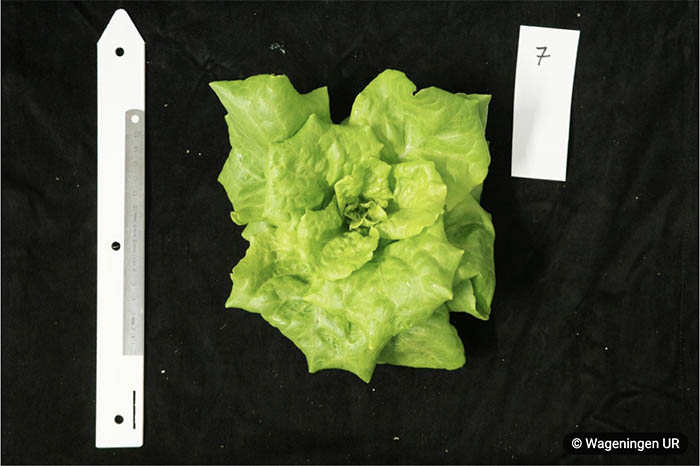
Better selection of varieties
According to Anton-Sales, the study’s insights now make it possible to predict with 91 percent accuracy whether a lettuce variety will bolt early or late. “That’s extremely valuable information for growers and breeders. Breeders can use this to cross stress-tolerant varieties with those that have a slower biological clock, giving plants resilience to climate change while keeping flavor intact. It also helps in selecting varieties for yield at specific times of year. Lettuce is one of the most widely eaten leafy vegetables worldwide, so these findings could make a real difference.”
For more information:
Wageningen University & Research
https://www.wur.nl/